


However, just 10 per cent of respondents from outside the Middle East region noted a strongly negative impact, with 37 per cent reporting a moderately negative impact.
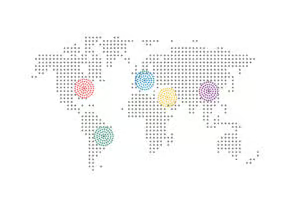
Within the region, 55 per cent of respondents from countries belonging to the Gulf Cooperation Council (GCC) reported a strongly negative impact from the conflict. The GCC comprises the United Arab Emirates, Bahrain, Saudi Arabia, Oman, Qatar and Kuwait.
GCC respondents identified a range of impacts, with 82 per cent citing postponement of events, 48 per cent reporting reduced participation at events and 39 per cent flagging event cancellations.
For countries in the rest of the world, the most commonly identified impact was reduced event attendance.
Locally, 43 per cent of respondents from Australia’s exhibition industry reported a moderate negative impact as a result of the conflict. Other countries outside the Middle East where a significant proportion of respondents flagged a moderate negative impact included Germany (60 per cent noted a negative impact), India (56 per cent), Thailand (53 per cent) and France and Turkey (both 50 per cent).
On the flipside, higher proportions of respondents from the UK, Argentina and Columbia reported limited or no impact from the conflict.
The latest global barometer also suggested something of a dampening in the exhibition industry.
There was a marked decrease in the proportion of the industry expecting an increase to rented space – 26 per cent in this survey, compared to 44 per cent six months ago. Those expecting a decrease in rented space also rose sharply, from eight per cent in the previous survey to 21 per cent in this survey.
Expectations of operating profits have also dropped considerably, with just 19 per cent of respondents expecting an increase in profits, compared to 33 per cent six months ago, while 23 per cent are expecting a decrease or a loss, compared to just six per cent expecting the same when surveyed last December.
The state of play for artificial intelligence in the exhibitions industry was also measured as part of UFI’s half-yearly barometer. Survey responses show more of the industry is adding AI into the mix, with the industry cohort not using artificial intelligence shrinking by four per cent compared to six months ago – now just nine per cent of respondents report their companies are not using AI at all. How the industry is employing AI is also maturing, based on the survey results.
In all, 466 companies from 59 countries and regions took part in this iteration of the UFI Global Exhibition Barometer.