

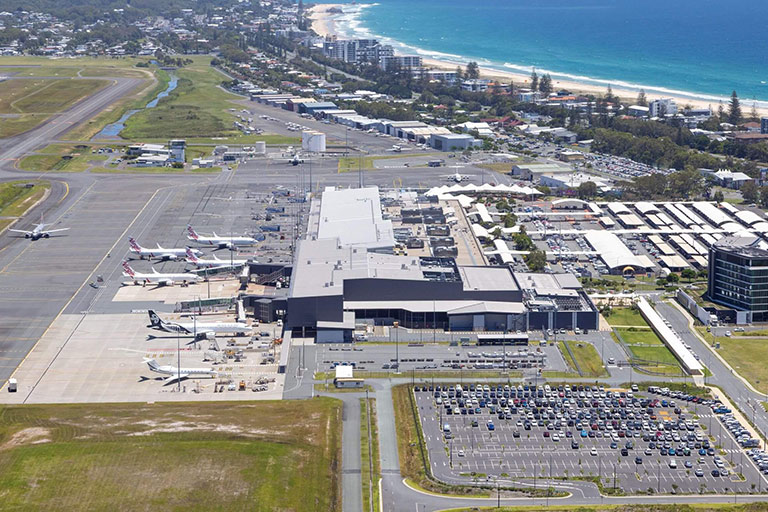
Domestic passengers made up the bulk of those passing through the airport, with 5.7 million travellers flying to or from other Australian destinations, a 5.6 per cent increase on the 2025 financial year.
International passengers stood at 800,000, a 25 per cent increase on the previous year.
“We welcomed several new services to our network this year, particularly between the Gold Coast and New Zealand, making us Australia’s most connected airport across the Tasman,” said Amelia Evans, CEO of Queensland Airports Limited, which operates Gold Coast Airport.
“Jetstar services to Hamilton and Dunedin launched in June 2025 exceeded expectations – with the airline increasing capacity on both routes just six months into operations. Qantas also recommenced international operations last month between Gold Coast and Auckland.
“Those routes, combined with strong demand on our existing trans-Tasman services, helped drive New Zealand passenger growth by more than 20 per cent year on year.”
“Passengers on other international routes grew by more than 53 per cent, boosted by the introduction of new services including Jetstar’s Bali route and Fiji Airways’ direct service to Nadi, which launched [in June].”
“The busiest month was January when we welcomed 637,000 travellers through the airport, which was the busiest month on record for New Zealand travel.”
Evans also noted that demand growth was outstripping supply growth for services between the Gold Coast and Sydney and Melbourne.
“On the Sydney route, airlines increased capacity by five per cent, adding more seats to the market, yet passenger numbers grew even faster – up six per cent, or an additional 144,000 travellers,” she said.
“We saw a similar trend on the Melbourne route, where capacity increased by four per cent while passenger numbers grew by five per cent, or more than 106,000 additional travellers.”