

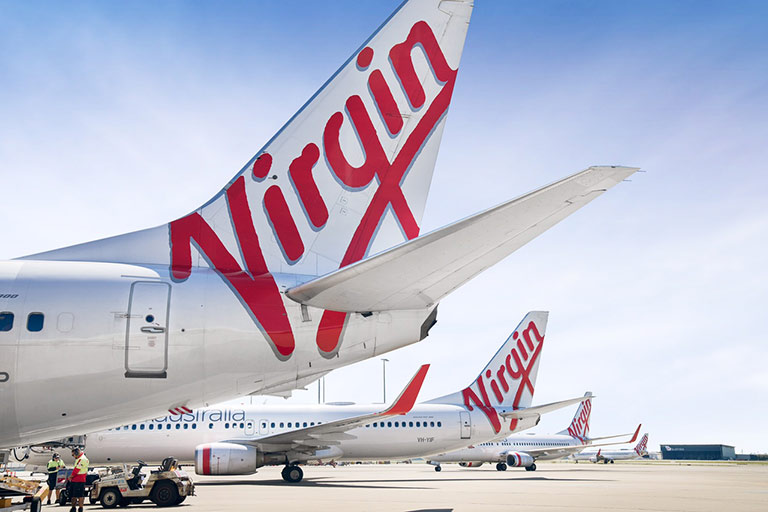
The largely domestic Australian airline saw underlying net profit after tax rise by 21.9 per cent, to $401 million, while the statutory post-tax net profit was up 4.7 per cent.
Virgin’s rising results come at a time when several other carriers are reporting losses or decreased profits, largely driven by escalating fuel costs as a result of the Middle East conflict.
At the beginning of the conflict, Virgin also endured prolonged cancellation of its flights to Qatar operated via a wet lease arrangement by Qatar Airways which has a 25 per cent stake in Virgin Australia.
Virgin’s underlying earnings before interest and taxes (EBIT) were also up by 13 per cent on the 2025 financial year, while its underlying EBIT margin was up by 12 per cent.
“Our FY26 results demonstrate that Virgin Australia has become a stronger and more resilient airline,” said Virgin Australia’s CEO Dave Emerson.
“Our strategy is working.
“We have built a simpler, more focused business with a primarily domestic network, targeted short-haul international services and global connectivity through our airline partners. That strategy, together with the continued benefits of our transformation program, has strengthened the quality of our earnings and positioned us well for the future.”
The airline flagged a $450 million benefit from its transformation program over the last financial year while its CFO, Race Strauss, said “effective fuel hedging” also helped deliver the positive financial result. Fuel hedging helps insulate the airline against jet fuel price increases.
“We delivered strong earnings growth and further margin expansion despite significant inflationary pressure across the aviation supply chain and a more challenging operating environment, while continuing to invest in the long-term competitiveness of the business,” said Emerson.
“As Australia’s value carrier, we are well positioned to meet growing customer demand for value, particularly as cost-of-living pressures remain elevated.
“Travel demand remained strong, with customers continuing to prioritise travel.
“Our disciplined approach to capacity, our focus on the customer segments where we can win,\ and the continued delivery of our transformation program supported strong commercial and operational outcomes.
“We continued to improve the experience for our guests through a more reliable operation, digital innovation, product improvements and fleet renewal.
“We are proud of the progress made in operational performance and customer satisfaction.
“On-time performance improved, our completion rate in FY26 was the highest of the major airlines and our strategic NPS increased again.
“This reflects the commitment of more than 8,500 team members, many of whom have share rights in the company through the Take Off Grant awarded at the time of the IPO.
“Looking ahead, we remain focused on providing value and choice to Australians to meet their travel needs.
“As an industry, we all have a role to play in managing costs so aviation doesn’t become unaffordable for Australians.
“The cumulative impact of rising costs across many parts of the aviation supply chain, particularly airport charges, remains a concern and reinforces the importance of continued financial discipline and transformation,” said Emerson.
Virgin Australia carried 21.3 million passengers across the year – up by 3.2 per cent – and increased its domestic capacity by 2.9 per cent but decreased short-haul international capacity by 4.5 per cent.
The airline added 17 new aircraft to its fleet over the year, including 13 Boeing 737-8 MAX aircraft and anticipates buying another five of the same aircraft this financial year. Currently, Virgin owns 39 per cent of its fleet.
While the airline maintains demand and bookings are strong this financial year, it is expecting to reduce its domestic capacity by three per cent by the end of the 2026 calendar year.