


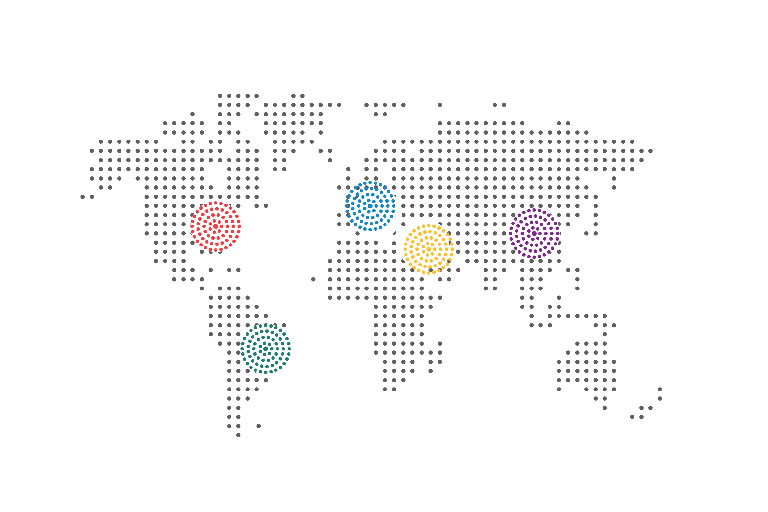
The Asia Pacific now has 41 venues with more than 100,000m2 of exhibition space, versus 38 venues of this scale in Europe. Last year the two regions were tied for the greatest number of mega venues.
However, all but four of Asia Pacific’s largest scale venues are in China, which accounts for more than 80 per cent of the exhibition space for the entire Asia Pacific region.
Outside of China, Thailand has the largest exhibition venue in Asia – the IMPACT Arena, Exhibition and Convention Center in Bangkok, with 137,000m2 of show space.
The Vietnam National Exhibition Centre in Hanoi, the Korea International Exhibition Center (KINTEX) in Goyang, South Korea and Singapore Expo Convention and Exhibition Centre are the only other venues in Asia outside China that have at least 100,000m2 of space.
By comparison, across Australia’s 10 major exhibition venues, there is a collective total of 201,027m2 of space, which still makes the country the eighth biggest player in terms of space across Asia Pacific.
UFI’s latest global exhibition space inventory shows venues with at least 5,000m2 of space have increased by 35 to 1,565 venues in the 2025 calendar year, with total exhibition space globally increasing by 900,000m2.
Europe still has the most venues, but the scale of individual venues in Asia Pacific is significantly larger than other geographic regions – nearly 10,000m2 larger than Europe, with an even bigger gap to other regions. South and Central America still do not have an exhibition venue of 100,000m2 or more.
In total, UFI says the world has 45.2 million square metres of indoor exhibition space.
“The headline numbers are about size, but the more important story is fit,” said Jochen Witt, president and CEO of jwc, the specialist management consultancy for the exhibition and conference industry that put the world map of exhibition venues together for UFI.
“Market requirements are rapidly changing and venue sizes and qualities need to adapt,” said Witt.
“Chasing the largest footprint is no longer suitable; successful destinations need to match capacity and quality to meet market requirements.
“Most of the world’s venues still offer less than 20,000m2, which is sufficient for many markets.
“For cities and governments considering new venue capacities, this data provides the benchmarks to get the sizing decision right. Venue quality is another topic but needs the same extent of focus.”