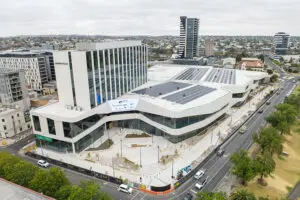



The stadium is a condition of the state getting its own AFL team and will provide significant business events space but has not had an easy run up to now.
An independent review of the stadium, released at the start of the year, suggested the costs of the project had been understated and put the actual cost at more than $1 billion.
The Tasmanian Planning Commission subsequently recommended the project not proceed, finding the costs outweighed the benefits.
Last week, one of the independent members of the state’s upper house, Bec Thomas, said that, in return for her support of the project, she had received a guarantee from government that taxpayer funding for the stadium would be capped at $875 million.
In the lead-up to last week’s vote, there had been rallies for and against the stadium development.
With the vote passing parliament, tenders have already opened for early works on the site.
“Together, we will turn this wasteland into a hive of economic activity that will strengthen our state for decades to come,” said Tasmania’s premier, Jeremy Rockliff.
“To everyone who questioned this project over the past three years, we thank you. Each question has made this project stronger and that’s something we can all be proud of.
“From our events sector to business conferences and professional sport, the Mac Point stadium will be a game-changer for our state.
“Now, it is time to get this done.
“It’s time to come together and make sure this stadium is the very best it can be.”
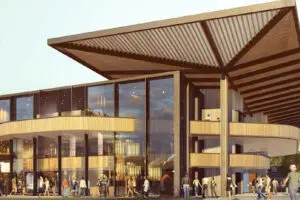
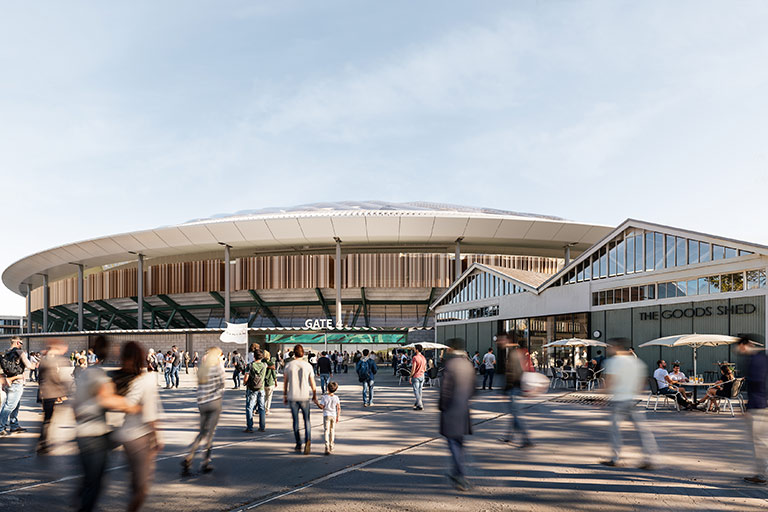
The covered stadium will have 24,500 seats, with capacity for 31,500 for concerts and an indoor function space for up to 1,700 people in theatre or 1,500 for gala dinners. The business events space will also be able to be divided in three.
As part of the Macquarie Point development, a historic Goods Shed will be moved to a different part of the site and provide space for exhibitions or off-site event dinners.
“This is an incredibly exciting day for Tasmania,” said Business Events Tasmania CEO Marnie Craig on Thursday.
“The approval of the Macquarie Point Stadium means we will soon have the infrastructure needed to host business events at a scale that has not been possible here before.
“Expanding our capacity beyond 1,100 delegates opens new opportunities and strengthens our position in the national events landscape.
“Business sectors across Australia have been eager to see investment in large-scale event infrastructure in Tasmania.
“Today’s decision gives them confidence that Hobart will be able to accommodate larger delegate numbers.”