


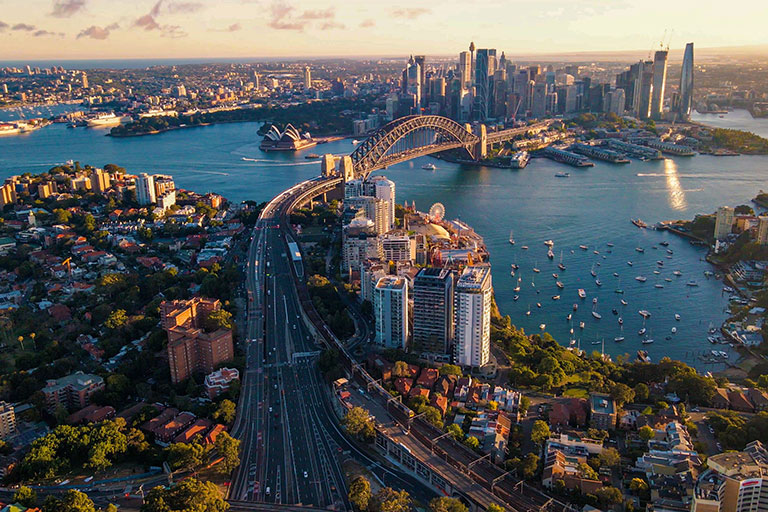
Accommodation Australia’s most recent report shows Sydney led the field again, boosting its average occupancy for the month to 89.1 per cent, up 3.7 per cent year-on-year. Sydney also saw a 14.2 per cent rise in average daily rate (ADR) to $342.74, while revenue per available room (RevPAR) leapt 18.4 per cent to $305.49.
A busy schedule of medical and legal conferences in Hobart, together with some major festivals saw Hobart outperform the mainland cities with occupancy of 92.4 per cent, ADR up eight per cent to $259.88 and RevPAR up 12.8 per cent to $240.15.
Occupancies for other major cities in February had Perth at 87 per cent, up 3.8 per cent year-on-year, and Adelaide at 82.2 per cent, up 6.3 per cent.
Melbourne, which hosted medical and finance events and the Asia Pacific Incentives and Meetings Event (AIME), made it back into the higher occupancy bracket at 80.5 per cent, up 4.5 per cent.
Despite hosting the Royal Edinburgh Military Tattoo and an Ed Shearan concert, Brisbane could only manage 76.1 per cent occupancy, down 3.2 per cent.
Canberra hosted leadership events including a women’s summit featuring former US Vice President Kamala Harris, as well as international cricket, however hotel occupancy was more or less static at 75.6 per cent, up 0.9 per cent.
Despite hosting a number of business and sporting events as well as gaining the Laneway Festival, a major music event that has shifted from Brisbane, Gold Coast occupancies lagged at just 67 per cent, down 1.9 per cent, following the end of school holidays.
Most cities saw gains in ADR for February, but standouts – aside from Sydney – were Adelaide, up 12.5 per cent, to $238.89, Perth, up 11.3 per cent to $262.93, and Brisbane up 11.2 per cent to $265.27. More modest growth was seen on the Gold Coast, up 6.5 per cent to $258.31 and Melbourne, up 5.3 per cent to $229.28, while Canberra’s average daily rate fell 4.8 per cent to $188.29.