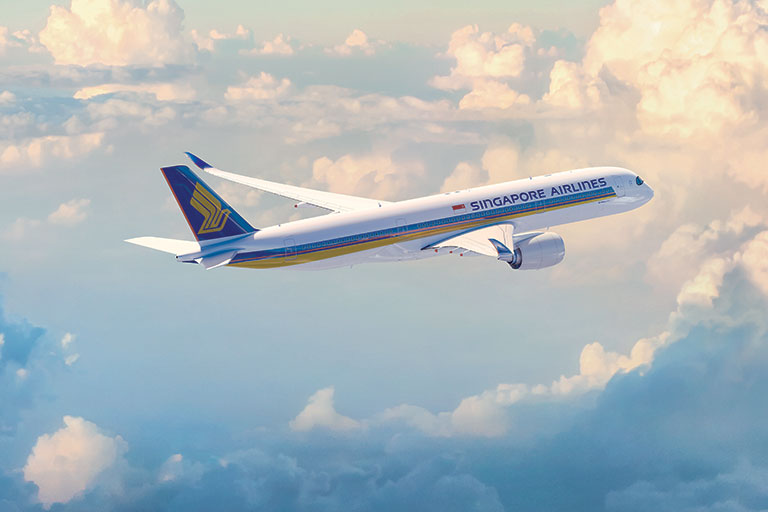
The major international carrier saw revenue climb 16.8 per cent during the first half of the current financial year – between April and September – compared to the same period a year ago, but also saw its fuel costs continue to spike, up 56 per cent on the 2025-2026 financial year first half.
As a result, its profit was down by 43.9 per cent, despite record passenger numbers of 21.8 million flying on both Singapore Airlines and its low-cost subsidiary Scoot.
The airline noted that its results in the second quarter improved – operating profit was up 16.3 per cent – offsetting weaker outcomes in the first quarter. In the first quarter, between April and June, Singapore Airlines posted a SG$76 million (AU$84.6 million) loss while also notching up record revenue, with the result attributed to the impact of the conflict in the Middle East, which sent fuel costs soaring.
In its most recent results, Singapore Airlines noted that its capacity was growing slightly faster than passenger growth. It also flagged inflation as one of the reasons for elevated operating costs.
While Singapore Airlines maintains passenger demand “remains healthy”, the carrier says that despite adjusting its fares, it is still taking a hit from the increase in jet fuel prices. It also warns that a prolonged conflict in the Middle East could impact travel demand and increase costs through inflation, in addition to extending the “significant pressure” that higher fuel prices are already putting on the the carrier’s costs.
Despite the turbulent times, Singapore Airlines is continuing to invest in its fleet.
Last week the carrier announced a SG$2 billion-plus (AU$2.3 billion-plus) investment in its long-haul cabin products. Upgrades include increased privacy for first class and business class customers and more space in premium economy and economy cabins.
“While each cabin has been designed individually, they are united by the same ambition to make the experience more comfortable, flexible and rewarding for our customers,” said Singapore Airlines’ chief commercial officer, Lee Lik Hsin.
“Singapore Airlines’ next-generation long-haul cabin products will ensure that our customers travel more comfortably than before and have greater control over their in-flight experience, whether they are working, dining, relaxing or resting.”
The new cabin designs will be deployed in retrofitted Airbus A350-900 aircraft and new Boeing 777-9 aircraft, with the upgrades going operational from the second half of next year. Flights on Singapore Airlines out of Melbourne are serviced by the A350-900 aircraft that are set for to feature the new-generation cabins.